Seifert Belmont Reds Breed Facts
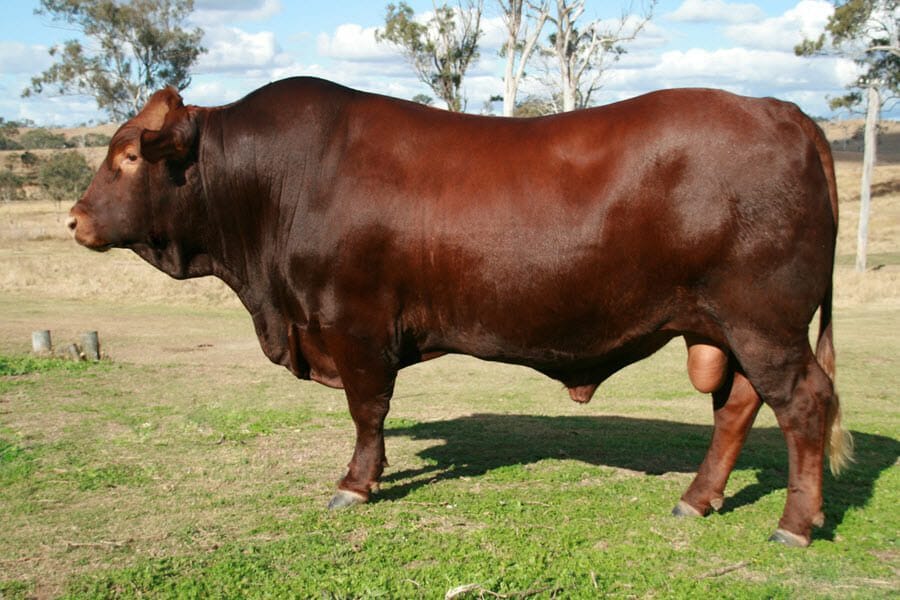
The full account of that work is on Origins and History. The Breed objectives were never about colour or fashion but about traits that pay: fertility, growth, carcase yield, meat quality, parasite and disease resistance, heat and drought tolerance, calving ease, temperament and structural soundness. The Breed Society Rules lock in the genetic recipe — half African Sanga, half temperate, with no more than a quarter Brahman — keeping every Belmont true to type while leaving the herd book open for grading up from a base cow herd in three back-crosses.
What sets the Belmont apart from every other composite is the depth of its Evaluation. Three decades of head-to-head trials at Belmont, Narayen, Brigalow, Mt Eugene, the CRC and across South Africa have measured the breed against Brahman and British crosses in tropical, sub-tropical and temperate country. The findings are remarkably consistent.
On Reproduction, Belmont Reds out-perform Brahman composites on fertility, weaning rate and bull semen quality. Growth rates match or exceed temperate breeds on native pastures without supplementary feed. Carcase trials show Belmonts delivering higher eye-muscle area, dressing percentage and saleable yield than trial averages, on grass and in the feedlot. Meat quality is equal to or better than British breeds for tenderness, marbling and consumer acceptance.
Underpinning every productive trait is Adaptation — 98% tick resistance, superior heat and drought tolerance, lower mortalities and dramatically reduced losses to lantana and pink eye. That hardiness translates directly into Management savings: docile temperament, easy calving, minimal handling stress and far fewer chemical inputs. In Crossbreeding programmes the Belmont lifts Brahman-based and British-based herds without the special handling temperate sires demand.
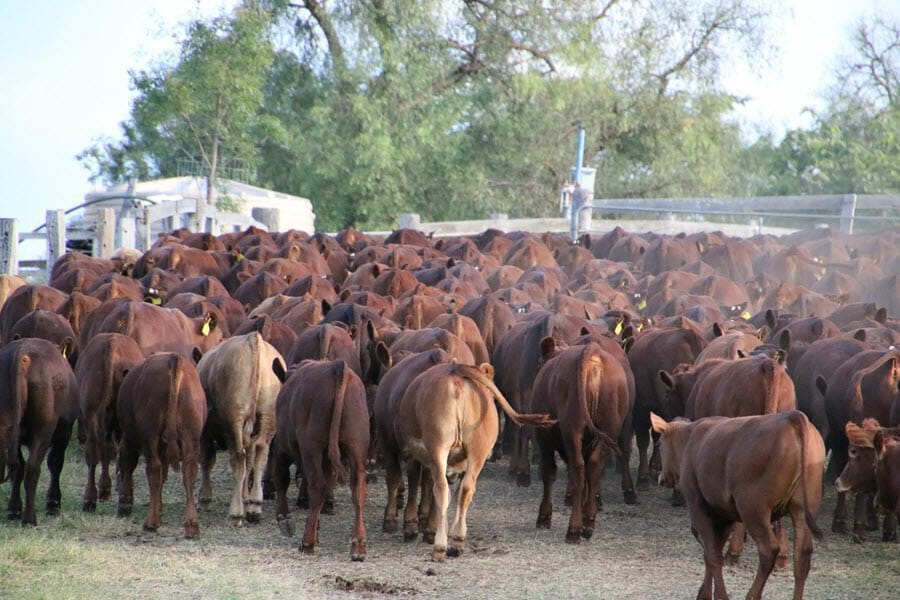
Seifert Belmont Red Cows and calves at the end of the day after a long walk to the yards for weaning.
Although Conformation still drives 88% of commercial bull purchases, objective carcase data proves the Belmont's frame is built for beef, not for show ribbons. The economic verdict is delivered on Herd production and profitability: 20% more income than Hereford and 12% more than Simmental herds on Brigalow, with CRC modelling showing up to $76 per adult equivalent gain when replacing Brahmans with a Belmont-type composite.
The Summary and conclusion pulls the entire body of evidence into a single page — and then we'd like to show you our bulls.